

Making Water Work: Integrating nutrient, waste and energy streams in agriculture development through hyacinth harvest and processing
- Reference # A.7.2122009
- Research Programs 7. Policy development and de-risking investment solutions
- Project Timeframe 1.5 years (2023 to 2024)
- CRCNA Funding $20,000
- Total project value $246,315

- Water: Making Water Work program
- Water
Project locations: Rockhampton, Yaamba, South Yaamba
Project partners: Fitzroy Basin Association Limited ; Rockhampton Regional Council; Qld Government Dept. Agriculture and Fisheries (DAF)
Project summary and impacts
This project investigated how invasive water hyacinth in the Fitzroy River could be transformed from an environmental management challenge into a productive agricultural resource. Originally introduced to Central Queensland as an ornamental plant, water hyacinth has become a significant aquatic weed due to its rapid growth, dense biomass and long-lived seed bank, reducing waterway health, impacting ecosystem condition and creating ongoing management costs for land managers and local councils.
The project explored practical pathways for harvesting and reusing water hyacinth biomass, with a focus on its potential as a soil ameliorant for agricultural production in the Lower Fitzroy region. By removing nutrient-rich biomass from the waterway, the project also examined opportunities to reduce nutrient loads in the Fitzroy catchment, improve water quality flowing to the Great Barrier Reef and support healthier aquatic ecosystems.
Research findings highlighted strong potential for water hyacinth to be repurposed into agricultural products such as compost, mulch and biochar, reducing reliance on imported soil amendments while supporting more circular approaches to land and water management. The project also assessed the economic feasibility of different beneficial end uses, including a cost-benefit analysis of harvesting and processing pathways to identify realistic implementation opportunities.
By linking invasive weed management with nutrient recovery and agricultural development, the project provides a practical model for turning an environmental liability into a productive resource, with potential benefits for water quality, farming productivity, waste reduction and regional resource efficiency across northern Australia.
Publications

18 March 2026
Impact report: Hyacinth harvesting and processing (Making Water Work program)
Type: Report
Industry: Water: Making Water Work program, Agriculture
21 May 2025
A Review on Harnessing the Invasive Water Hyacinth (Eichhornia crassipes) for Use as an Agricultural Soil Amendment
Type: Report
Industry: Water: Making Water Work program

3 January 2025
Final Report – Hyacinth Recovery and Reuse Pilot
Type: Report
Industry: Water: Making Water Work program
26 November 2024
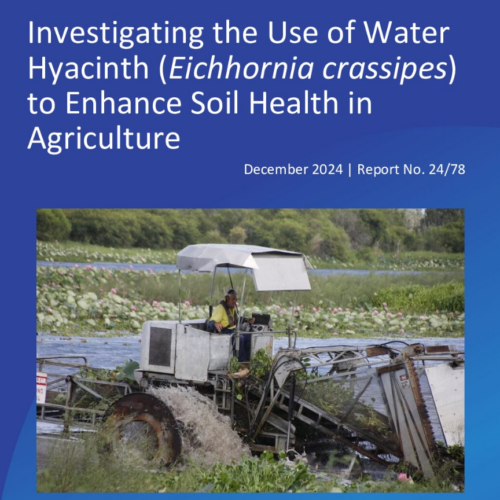
Investigating the Use of Water Hyacinth to Enhance Soil Health in Agriculture
Type: Report
Industry: Water: Making Water Work program
24 October 2024
Agricultural Leaders: CRCNA presentation Making Water Work program
Type: Presentations
Industry: Water: Making Water Work program, Water

21 March 2024
Video: Making Water Work program – hyacinth harvest and processing
Type: Video
Industry: Water: Making Water Work program, Water

20 May 2024
Rockhampton’s Fitzroy Food Bowl prospectus factsheet and video
Type: Video
Industry: Water: Making Water Work program
News


24 October 2024