

- Author Barnett, R., Normyle, A., Doran, B., Vardon, M
- Publish date 18 August 2022
- Type Report
- ISBN 978-1-922437-37-2
- Documents
- First Nations led business development
- Strategic policy development
Summary
The purpose of the situational analysis is to attain a better understanding of the relationship between First Nations primary production enterprises and the larger Australian primary industries, focusing primarily on agriculture.
The study identifies that:
- While a significant amount of primary production occurs on the First Nations Estate, a significant majority of this is not undertaken by First Nations primary production enterprises
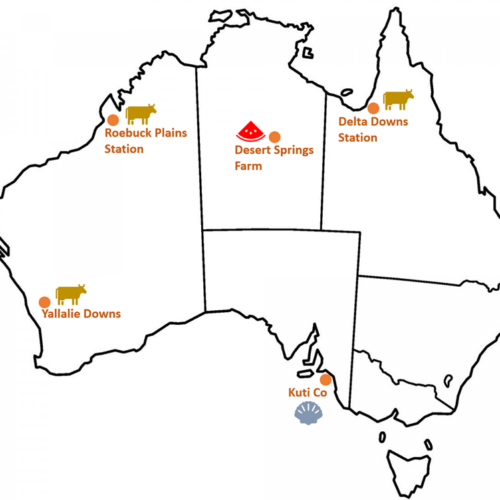
- There is still a relatively small, but emerging and unique First Nations primary production industry that is diverse, increasingly financially sustainable, and delivering significant cultural, environmental and social benefits to local First Nations communities
- There is opportunity to grow the First Nations primary production industry so that it makes a significant and unique contribution to the growth targets of Australian primary industries – beyond what the agricultural industry or the Australian Government have contemplated.
To achieve this mutually beneficial outcome for Australia’s First Nations people and their agricultural industry, a concerted effort needs to be made to better understand:
- the nature and extent of agricultural production that takes place on the Indigenous Estate
- the nature and extent of the First Nations primary production industry; opportunities to accelerate First Nations agricultural capability development
- attraction of social impact and other Environmental, Social and Governance (ESG) oriented investment to the emerging sector. This effort needs to be overseen and driven by a multi-stakeholder, mission-oriented industry development governance framework.
Key recommendations include:
- Establish adequately reliable agricultural, fisheries, aquaculture and forestry economic data pertaining to the Indigenous Estate and Indigenous primary production enterprises.
- Develop a portfolio of positive First Nations primary industries case studies to generate stakeholder (including investor) confidence in the First Nations primary industry sectors.
-
Engage with the global social impact investment sector to develop a framework for identifying potential flow across First Nations primary production in Australia.
-
Establish a First Nations primary industries taskforce to develop strategies and initiatives to:
-
identify opportunities, and activate primary production from underutilised areas of the Indigenous Estate
- identify and advocate for changes to legislation as necessary to optimally facilitate increased production from the Indigenous Estate and ESG collaborations
- identify opportunities and develop strategies to optimise market access, enter new markets and develop new products
-