


- Author Condon, K., Arbon,P., Huerlimann, R., Ariel, E & Jerry, D.
- Publish date 12 October 2020
- Type Report
- ISBN 978-1-922437-32-7
- Documents
- Aquaculture
Summary
This Biosecurity in Northern Australian prawn aquaculture study represents the most extensive investigation into the distribution and quantity of multiple pathogens collected from multiple stages of production to be conducted on Australian farmed prawns.
This report provides a detailed overview of the pathogens and the level of protection provided by the current biosecurity practises that occur in prawn farms in Australia. A direct outcome of this study, has been the significant increase in the volume of pathogen data available to Australian prawn farmers needing to prepare risk assessment and biosecurity management plans under the QLD Biosecurity Act (2014).
Several strategic recommendations have been provided with the support of the broader industry and project participants, the Australian Prawn Farmers Association (APFA)
For more information about this report, please contact the AFPA’s Kim Hooper: kim.hooper@apfa.com.au.
Projects

Biosecurity in northern Australian prawn aquaculture
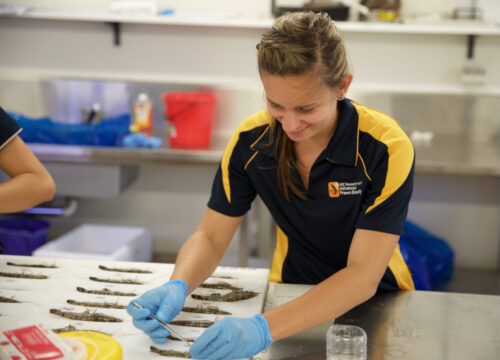
This project will deliver one of the most comprehensive biosecurity audits of prawn aquaculture farms in Northern Australia. The audit is seeking to identify known and unknown pathogens and develop risk management strategies for industry. This project is twofold. Firstly, it will conduct a biosecurity metanalysis using traditional and molecular diagnostic tools to establish what pathogens currently occur on prawn aquaculture farms (i.e. the farm pathobiome) and how they relate to productivity. Secondly, it will develop a risk management strategy for industry and provide on-farm biosecurity training, so industry can continue to monitor and manage pathogens. Researchers will visit farms from Mareeba in the Far North to Logan in the state’s South-East, to assess and determine the level of preparedness of biosecurity practices and protocols currently in play. They will work with stakeholders to assist in the improvement or formulation of enterprise-level biosecurity plans.