

- Author Northern Territory Government
- Publish date 31 December 2023
- Type Fact sheet
- Documents
- Aquaculture
- First Nations led business development
Summary
These two practical guides provide information to support the establishment and operation of blacklip rock oyster aquaculture in the Northern Territory.
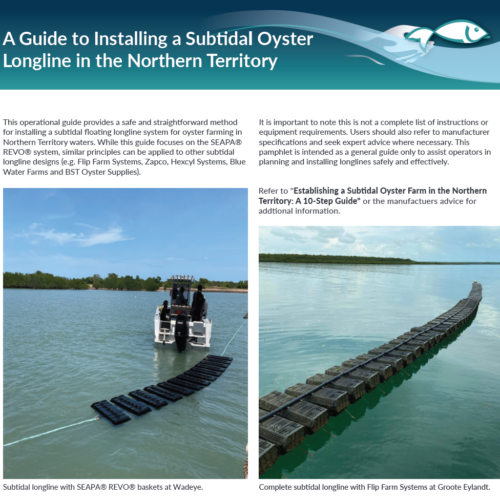
Developed by the Northern Territory Government as part of the CRCNA-supported tropical rock oyster industry development program, the resources cover the installation and maintenance of subtidal oyster longline systems, alongside water quality monitoring and shellfish sampling requirements.
The guides provide step-by-step instructions, equipment checklists, safety considerations and sampling procedures to support oyster farming operations, food safety compliance and the classification of commercial harvesting areas.
Together, they provide practical resources for emerging oyster producers and remote coastal communities, supporting the development of a safe and sustainable tropical oyster aquaculture industry across northern Australia.
Projects

Blacklip Rock Oyster industry development
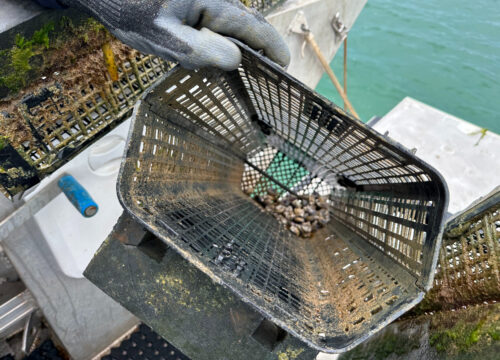
This project will continue to build on the foundational work undertaken by researchers at the Darwin Aquaculture Centre (DAC) as part of the initial Tropical Rock Oyster research and development project (A.2.1819053NT). During the first phase of the CRCNA-funded project (2019-2023), significant progress was made, culminating in the development the world’s first hatchery manual for the Blacklip Rock Oyster (BRO). Over this period, hatchery production at DAC increased exponentially – from 10,000s to 100,000s spat per spawning run. This growth was driven by improved hatchery techniques, enhanced through broodstock conditioning, settlement, and nursery trials conducted during the first project phase. However, as production scaled up, new challenges emerged in the nursery phase, resulting in inconsistent spat yields. Further research is needed to optimise production and reduce variability between spawning runs. This is critical to ensuring farms have consistent access to commercial quantities of advanced spat, which in turn builds industry confidence and encourages private investment. The project will continue refining year-round supply of hatchery-reared spat (juvenile oyster), a fundamental requirement for commercialisation, investor confidence, and industry growth. Extension and mentoring will also be provided to support oyster farmers and Indigenous communities, alongside farming trials across the Northern Territory. Jobs and economic impact An established Tropical Rock Oyster industry is expected to create more than 900 direct and indirect regional jobs in Northern Australia within 20 years, adding an estimated $217 million to the north’s economy. These jobs will be multi-disciplinary and include farm technicians, key trades, vessel operators, machinery supplier, processors and distributors. Oyster grow-out is a labour-intensive process due to the requirement for continual grading of oysters and management of oyster gear biofouling. Increased investment According to the Pilbara Development Commission, establishing a commercial farm producing 100,000 dozen oysters annually would require an investment of approximately $3 million. In addition to commercial operations, there are significant opportunities for First Nations communities to participate in the industry – either as independent ventures or through joint ventures with shellfish aquaculture companies. Social well-being This project involves extensive First Nations participation in foundational research, industry development, and business planning. Direct access to researchers, agencies, and industry partners provides opportunities for community empowerment and informed decision-making regarding participation in this emerging industry – either directly or through partnerships. Access to training and hands-on experience in research and aquaculture supports First Nations aspirations for greater involvement in Sea Country management. It also fosters two-way capacity building and knowledge exchange between First Nations community researchers and industry, government and research organisations.
Tropical Rock Oyster research and development WA
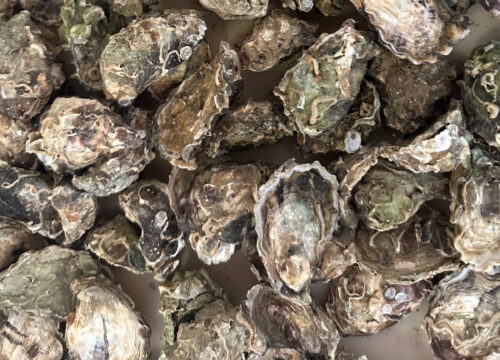
This project established a collaborative cross-jurisdictional approach to address the most significant technical and regulatory issues that confront the fledgling Tropical Rock Oyster (TRO) industry. Several key issues were examined and resolved though sub-projects designed to meet identified research needs, supporting the industry’s development. Securing commercial spat supply – the project utilised existing hatchery infrastructure and expertise at the DPIRD Hillarys facility to refine culture techniques for Blacklip Rock Oyster (BLRO) and other TRO species identified in Western Australia. Researchers applied standard hatchery protocols – commonly used for Sydney Rock Oysters (SRO’s)-to TRO in the species found in the Pilbara and Kimberley regions, comparing performances before transitioning trials to ocean-based nurseries. Optimisation of grow-out methods and gear technology – Grow-out trials were conducted in the Kimberley (Cone Bay) and the Pilbara (three sites within the Dampier Archipelago), using both intertidal and subtidal farming systems for new TRO species and BLRO in the Kimberley. These trials aimed to: Identify TRO species with strong aquaculture potential and determine the most suitable culture system (intertidal or subtidal). Compare the performance of up to three TRO species (likely two) during grow-out to select the best-performing species. Road-test various grow-out scenarios with industry partners for new TRO species. This project developed identification tools and established agreed common names for key commercial tropical oyster species to prevent potential market confusion and ensure accurate licencing and management of the emerging industry. The Darwin Aquaculture Centre produced a hatchery manual for the Blacklip Rock Oyster (Saccostrea echinata). In April 2023, more than 700,000 mature oysters – grown as part of this research project – were transferred to commercial partner Maxima. Maxima will continue refining grow-out techniques, with the goal of scaling up to commercial harvest within the next decade.
Tropical Rock Oyster research and development NT
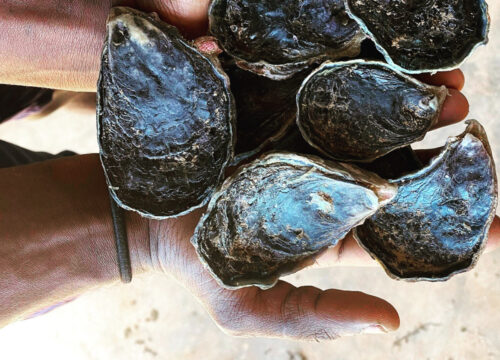
This project established a collaborative, cross-jurisdictional approach to address the most significant technical and regulatory challenges facing northern Australia’s fledgling Tropical Rock Oyster (TRO) industry. The project was delivered by research teams in Western Australia (A.2.1819053WA) and the Northern Territory and comprised three sub-projects, each targeting specific research needs: Sub-Project 1 – Species Identification, Pathogen Screening and Translocation Risk assessment (NT) This research standardised oyster common names and assessed the need for designated farming and translocation zones across northern Australia. It considered risks associated with genetic pollution of wild populations, existing knowledge of tropical ecosystems and oyster diseases, insights from the pearl industry, and current practices in edible oyster aquaculture in other regions of Australia. The findings provided a strong scientific base for biosecurity planning, management and operational procedures for the developing industry, while also and identifying key issues for further research and development. Sub-Project 2 – Securing commercial spat (juvenile) supply Early hatchery development work in the Northern Territory and Western Australia revealed that Tropical Rock Oysters have different larval requirements compared to the commercially produced Sydney Rock Oyster (SRO) and Pacific Oyster (PO). As a result, existing hatchery manuals for SRO and PO were found to be ineffective for TRO spat production. Researchers utilised the Darwin Aquaculture Centre’s hatchery infrastructure and expertise to refine culture techniques for the Blacklip Rock Oyster. Hatchery trials focused on improving larval settlement procedures, including experiments on salinity levels, settlement timing, and the effectiveness of chemical and substrate cues. Additional work included conditioning broodstock and evaluating optimal hatchery systems. Sub-Project 3 – Optimisation of grow-out methods and gear technology This sub-project investigated optimal grow-out methods and gear technologies for Blacklip Rock Oyster production. Farming trials were conducted using intertidal systems at two sites: South Goulburn Island (supported by the Yagbani Aboriginal Corporation) and Groote Eylandt (supported by the Anindilyakwa Land Council). The trials included: Trial 1 Assessed the impact of three basket heights in the tidal range (standard, low and dynamic) and two stocking densities (standard and half of standard) on oyster growth, survival and basket biofouling. Data collected included growth rates, shell shape, survival and biofouling. Trial 2 Compared the performance of different gear types in producing marketable Blacklip Rock Oysters. This trial provided data on oyster growth and shape, as well as qualitative insights into the operation, maintenance, and performance of each system.