


- Author Adriana Abbs, Kevin Walsh, Andrew Dowdy, Andrew Robertson and colleagues, produced through Ag Econ / CottonInfo collaboration
- Publish date 28 March 2025
- Type Fact sheet
- Documents
- Cotton Grains Cattle program
- Agriculture
- Broadacre cropping
Summary
Drivers of northern Australian climate and weather for cotton production (Northern Australia Climate Review 2025)
This review explains the major climate systems that influence rainfall, temperature and seasonal variability across northern Australia, and how these forces affect cotton production. It outlines the roles of ENSO, the Australian monsoon, the Indian Ocean Dipole and related climate drivers, and shows how their interactions shape wet season reliability, rainfall variability and production risk. The publication provides a practical climate framework to support strategic planning, risk management and decision-making for cotton growers and industry stakeholders in northern Australia.
This publication is related to projects in the Cotton, Grains, Cattle program.
Projects
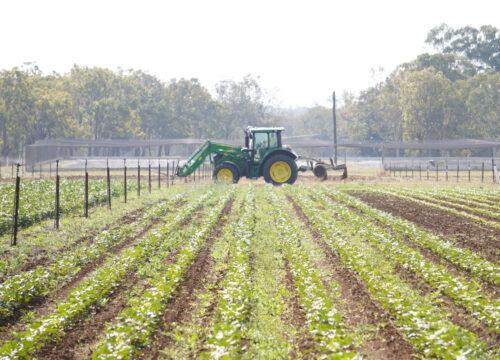

Cotton Grains Cattle program: North Queensland farming systems
This project aims to co-design scalable diversification options and drought resilience practices for cotton, grain, and cattle enterprises in northern Queensland. It will also quantify the economic, social, and environmental values and risks associated with these options. Participatory, whole-farm systems research will examine: Current farm resources and business performance. Co-designed, time sensitive responses to drought and market volatility. Information and tools required for adoption of new practices. The impact of extreme climate events on productivity and sustainability. The level of climate information accuracy and timeliness required to deliver economic value. How climate variability influences the risk of not adopting available solutions. Whole-farm economic models assessing the value of on-farm produced grains and/or forage crops when integrated into cropping systems for cattle feed. Alignment of existing environmental stewardship frameworks with North Queensland mixed farming systems, agribusiness, and regional community development goals. Appropriate stewardship guidelines and self-assessment options to balance costs, legislation, social license and value chain demands and opportunities. This project will support North Queensland farmers and rural communities by providing the information and skills needed to capitalise on agricultural commodity booms. It will also help identify scalable business plans for reinvestment in resilient crop-livestock systems that deliver a lasting legacy of economic, social and environmental prosperity for rural Northern Queensland. The key drivers for this change include high land and commodity prices, climate variability, cattle biosecurity and market risk, emerging carbon markets, and policy settings. The project brings together experienced public and private researchers, along with value chain actors in a coordinated approach to enable cotton-led farm diversification as part of sustainable cropping systems that also benefit cattle producers.
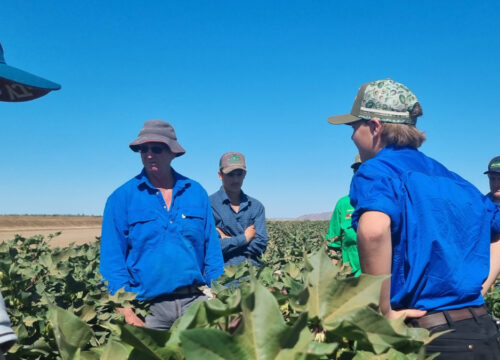
Cotton Grains Cattle program: Addressing the fundamentals of cropping-systems in the Northern Territory
Improving the productivity and profitability of the Northern Territory’s cropping system is crucial for the sustainable growth of the regions agriculture sector. Current research and development efforts, along with major infrastructure investments, are supporting the establishment of a self-sustaining cotton industry in the Top End. However, significant knowledge gaps remain in areas such as crop establishment, agronomy, biosecurity, technical skills, and the social factors that present barriers to the growth of broadacre cropping in the Northern Territory. These gaps must be addressed for the sector to fully realise its potential. This project will integrate cropping trials with efforts to characterise and map soil types and water-holding capacity at participating trial sites, as well as in new potential cotton-growing areas across the Northern Territory. Scenario planning will also be conducted to better understand the economic and environmental impacts of the project’s recommendations. Practice change, guided by the knowledge co-generated throughout the life of the project, will lead to sustainable social, environmental, and economical impacts. Specific outcomes include: Growers confidently adopting crop establishment recommendations for reliable production. Growers making informed decisions on crop rotation and cover crops to maximise production and profitability. Growers making informed and conscious decisions regarding nutrition application and the selection of integrated pest management (IPM) strategies for insect and disease control. Current growers and potential investors in the Northern Territory having access to adequate information for selecting suitable crops for new establishments. Growers having access to a decision-making toolkit that supports investment in the industry, including risk management planning. Aboriginal land councils, Aboriginal development corporations, and Indigenous communities being supported through access to information that informs investment in broadacre cropping, capacity building, and other identified needs. The scientific and commercial communities accessing trusted information from the project’s trials. The Northern Territory cotton industry having access to tailored training materials for ongoing reference and capacity building. Publications Scoping mushroom cultivation in the Northern Territory: Applying a circular economy approach https://www.sciencedirect.com/science/article/pii/S294975072500104X Challenges and prospects of cotton farming in the tropics: lessons for northern Australia https://link.springer.com/article/10.1186/s42397-025-00249-7
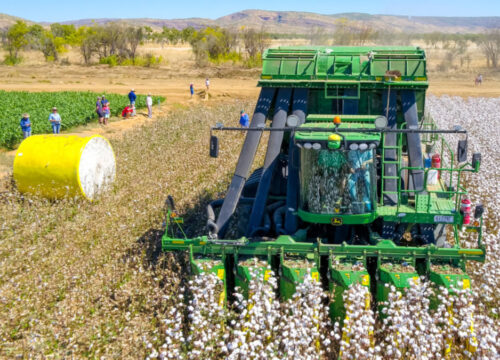
Cotton Grain Cattle program: Supporting sustainable diversification of ORIA cropping systems
Research in Western Australia’s Ord River Irrigation Area (ORIA) has demonstrated opportunities to improve the productivity, profitability and sustainability of irrigated cropping systems through crop diversification and improved agronomic practices. Delivered through the CRCNA’s Cotton, Grains and Cattle Program, the project investigated the integration of chickpea and mungbean rotations into cotton production, more efficient nitrogen fertiliser management and innovative approaches to weed control. Field trials demonstrated that legume rotations can improve soil nitrogen availability, while optimising nitrogen fertiliser application timing increased cotton lint yields by approximately 3.5 bales per hectare in one trial. The research also explored precision, non-chemical weed management technologies to support more sustainable production systems. The findings provide growers with practical evidence to inform cropping decisions, improve resource-use efficiency and manage production risks. They also contribute to the knowledge base supporting continued agricultural investment, diversification and development in the East Kimberley.