

- Author Megan Star, John Rolfe, Dylan Irvine, Ukamaka Nwobodo, Ronju Ahammad, Samy Leyton-Flor, Kamal Kamaljit Sangha and Jaba Sarker
- Publish date 16 October 2026
- Type Report
- ISBN 978-1-922437-77-8
- Documents
- Water Security program
- Strategic policy development
- Water
Summary
This report examines the economic opportunities and practical challenges associated with sustainable agricultural development in the Daly River catchment, with a focus on water access, cropping profitability and water-use efficiency.
Combining interviews with growers and industry participants with economic analysis, the research compares agricultural development in the Douglas Daly region and Western Australia’s Ord Irrigation Area. It also assesses the financial viability and water requirements of irrigated and rainfed cotton, alongside established crops including mangoes, watermelons, Asian vegetables and hay.
The findings highlight the importance of secure and sustainable water access, investment confidence, efficient irrigation and appropriate policy settings in supporting agricultural development.
The report provides evidence and strategic recommendations to inform future cropping decisions, water planning and sustainable agricultural investment in the region.
Projects
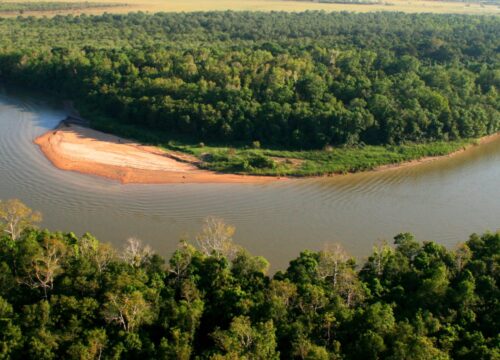

Water Security for Northern Australia program: Daly River catchment (NT)
The Daly River catchment in the Northern Territory is one of four focal nodes within the Cooperative Research Centre for Developing Northern Australia’s (CRCNA) Water Security for Northern Australia (WSNA) program, delivered in partnership with the Northern Australia Universities Alliance (NAUA). The Daly River is one of the Northern Territory’s most significant river systems, supporting important agricultural industries, culturally and environmentally significant ecosystems, and extensive groundwater-dependent habitats. Understanding how its water resources respond to climate variability, agricultural development and changing water demand is essential to informing sustainable water management. The completed research program brought together expertise in hydrology, climate science, ecology and agricultural economics to investigate four interconnected areas: the impacts of climate change on groundwater recharge, groundwater and surface water interactions in the Oolloo Dolostone and Tindall Limestone aquifers, the ecological implications of wet-season surface water extraction, and opportunities for sustainable cropping systems in the Daly River catchment. Researchers developed climate projection datasets and practical modelling guidance to support long-term groundwater planning, improved understanding of the aquifers and springs that sustain the Daly River’s dry-season flows, and assessed how wet-season water extraction could affect floodplain inundation, wetlands and river connectivity. The research also incorporated satellite mapping, hydrological modelling and Traditional Ecological Knowledge through collaboration with the Malak Malak Rangers. Agricultural research examined the economic viability, water requirements and development constraints associated with existing and emerging crops, including cotton, mangoes, watermelons, Asian vegetables and hay. The findings identified opportunities to improve water-use efficiency and highlighted the importance of water security, infrastructure, investment confidence and appropriate policy settings for future agricultural development. The completed research provides a stronger scientific and economic evidence base for water allocation, agricultural investment and environmental management in the Daly River catchment. Together, the findings support more informed decisions about balancing future development with the protection of the river’s ecological, cultural and community values. Northern Australia Water Resources Digital Library The project established the Northern Australia Water Resources Digital Library, containing more than 740 research entries, alongside freely available datasets, modelling tools and decision-support resources. Access it via: https://nawrdl.github.io/#/ Project publications: Mourot, F.M., Irvine, D.J., Remenyi, T.A., Hutley, L.B., Crosbie, R.S. and Moore, C.R., 2025. Producing hydrological projections under climate change: A groundwater-inclusive practical guide. Earth’s Future, 13(8), e2025EF006316. Irvine, D.J., de Mello, K. and Mollick, P., 2026. Assessing seasonal river-wetland connectivity using remote sensing-based monitoring in tropical environments. Ecological Indicators, 183, 114624. Lee, S., Irvine, D.J., Duvert, C., Rau, G.C. and Cartwright, I., 2024. A high-resolution map of diffuse groundwater recharge rates for Australia. Hydrology and Earth System Sciences, 28, 1771–1790 (CDU PhD output contributing to Project 2.1). Mollick, P., de Mello, K., Irvine, D.J., Malak Malak Rangers, Garcia, E.A., Rodrigues dos Santos Junior, E. and Crabbe, R.A. Integrating Indigenous Knowledge, multi-sensor remote sensing and machine learning for mapping wetlands in northern Australia. Preprint, SSRN; submitted to Remote Sensing Applications: Society and Environment, June 2025. Irvine, D.J., Mourot, F.M., Hutley, L.B., Cartwright, P.J. and Waltham, N., 2026. Investigation of multi-catchment climate change models: modelling impacts over Northern Australia. CRCNA Final Report, Project 2.1. ISBN 978-1-922437-74-7. Irvine, D.J., Duvert, C., Howcroft, W., Lee, S., Nwobodo, U. and Ulloa Cedamanos, F., 2026. Improving the understanding of the Oolloo Dolostone springs and the coupled groundwater-surface water model. CRCNA Final Report, Project 2.2. ISBN 978-1-922437-75-4. Irvine, D.J., de Mello, K., Mollick, P., Malak Malak Rangers, Nair, D., Garcia, E., Kopf, R.K., Howcroft, W., Crabbe, R., Cartwright, P., Waltham, N., Eisemberg, C. and Flint, N., 2026. Investigation of wet season water take on floodplains and water requirements of ecosystems. CRCNA Final Report, Project 2.3. ISBN 978-1-922437-76-1. Star, M., Rolfe, J., Irvine, D., Nwobodo, U., Ahammad, R., Leyton-Flor, S., Sangha, K. and Sarker, J., 2026. Cropping systems in the Daly River catchment, present and future. CRCNA Final Report, Project 2.4. ISBN 978-1-922437-77-8. Node contact Dr Dylan Irvine Outstanding Future Researcher – Northern Water Futures Charles Darwin University dylan.irvine@cdu.edu.au Program background The Water Security for Northern Australia (WSNA) program was delivered through a partnership between the CRCNA and the Northern Australia Universities Alliance. The program supported research addressing key barriers to sustainable water resource use across four focal nodes: the Gilbert River catchment (Queensland), Daly River catchment (Northern Territory), Ord River Irrigation Area (Western Australia) and Lower Fitzroy catchment (Queensland). These locations were selected following earlier assessments and stakeholder consultation identifying areas likely to experience future water development pressures. Research priorities were developed through a regional co-design process involving Traditional Owners, government, industry and other stakeholders, with regional stakeholder advisory groups supporting the program’s delivery.