


- Author CRCNA and research partners
- Publish date 21 September 2026
- Type Report
- Documents
- Forestry
Summary
This impact assessment summarises the CRCNA project, A.1.2021013, Silvopastoral trials of commercial pine systems in north Queensland.
The findings of the project included a 55-hectare trial near Cardwell in north Queensland, that tested cattle grazing in commercial pine plantations. Thinning the trees increased pasture growth and cattle liveweight gains compared with an unthinned plantation.
The evaluation also examines 25-year financial modelling for systems combining grazing, timber and potential carbon income. It provides evidence to inform landholder and forestry industry decisions, while recognising that longer-term timber performance and commercial uptake remain to be established.
Projects
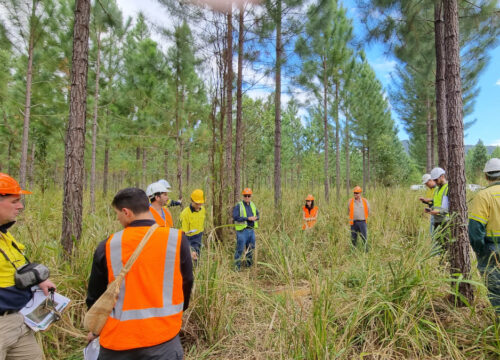

Silvopastoral trials of commercial pine systems in North Queensland
This project investigated the potential of silvopastoral systems to diversify income streams for northern Australian graziers while expanding the region’s softwood timber resource. Focusing on commercial Caribbean pine plantations in north Queensland, the research evaluated how timber production, cattle grazing and carbon sequestration could be integrated within the same land management system. Field trials compared traditional pine plantations with alternative silvopastoral designs that combined reduced tree stocking rates with livestock production. Researchers assessed the interactions between tree growth, pasture production, cattle performance and carbon outcomes, while modelling the financial performance of integrated timber and beef enterprises relative to conventional grazing systems. The project provided evidence on the productivity, profitability and environmental benefits of combining forestry and livestock production, including opportunities for farm income diversification, improved resilience to climate variability and increased carbon sequestration. By examining the trade-offs and synergies between timber, beef and carbon markets, the research delivered valuable information to support landholder, investor and industry decision-making. The findings contribute to a stronger evidence base for the adoption of silvopastoral systems in northern Australia and highlight pathways to increase regional timber supply, support sustainable grazing enterprises and unlock new opportunities for carbon and natural capital investment.