

- Author Kelly Condon, Phoebe Arbon, Thomas Ackery, Roger Huerlimann, Ellen Ariel and Dean Jerry.
- Publish date 31 December 2021
- Type Presentations
- Documents
- Aquaculture
Summary
This research presentation outlines the findings and recommendations of the CRCNA project Improving Biosecurity in Australian Prawn Farming, delivered in partnership with James Cook University and the Australian Prawn Farmers Association.
Drawing on more than 2,500 samples and approximately 25,000 tests, the research investigated pathogen prevalence, transmission pathways and potential impacts on prawn health and farm productivity.
The findings provide an evidence base for improving disease surveillance and biosecurity management across Australia’s prawn farming industry. Key recommendations include strengthening border controls, improving regional disease-response capability, supporting the domestication of black tiger prawns and increasing industry training in prawn health and biosecurity.
The presentation provides detailed research findings and practical recommendations to support more resilient and sustainable prawn aquaculture production.
Projects
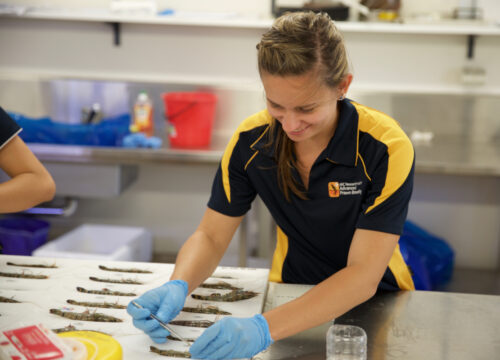

Biosecurity in northern Australian prawn aquaculture
This project delivered the most comprehensive assessment of pathogen distribution and biosecurity risks ever undertaken in the Australian prawn farming industry. Working closely with prawn farmers and industry partners, researchers examined the presence and movement of multiple pathogens across different stages of production to better understand disease risks and the effectiveness of existing biosecurity practices. The project significantly expanded the pathogen data available to Australian prawn farmers, providing valuable evidence to support biosecurity management plans, risk assessments and compliance with biosecurity regulations. It identified key pathways for disease transmission, highlighted the benefits of improved broodstock management and strengthened industry understanding of how pathogens move through production systems. By providing practical recommendations, training and farm-specific insights, the project helped improve biosecurity capability across the sector and laid the foundation for future research and innovation. The findings continue to support more resilient, productive and sustainable prawn farming operations across northern Australia.