

- Author John Rolfe, Megan Star, Jaqui Payne and Delwar Akbar
- Publish date 21 November 2024
- Type Report
- Documents
- Water: Making Water Work program
Summary
This final report is an output of the Making Water Work program project Defining a supply chain and development precincts vision (A.7.2122006).
It examines the planning, governance and investment lessons from the Rookwood Weir development in Queensland’s lower Fitzroy region, with a focus on how major water infrastructure can support agricultural growth and regional economic development. The report identifies key enablers for successful development, including strong regional collaboration, clear governance, coordinated supply chain planning and investor confidence. It also explores future opportunities to expand agricultural production through improved water use efficiency, additional infrastructure and precinct-based development approaches, offering practical insights for water-led development across northern Australia.
Projects
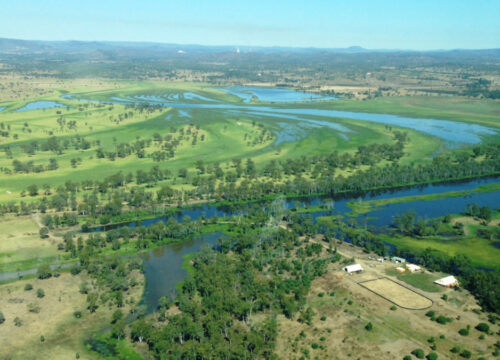

Making Water Work program: Defining a Supply Chain for Lower Fitzroy
Access to water alone does not guarantee agricultural development. New irrigation-based enterprises also require coordinated infrastructure, supply chains, services, governance and investor confidence to support long-term growth. In northern Australia, where there are relatively few examples of large-scale irrigation precinct development, understanding how these factors align is critical to reducing development risk. This project developed a strategic vision for agricultural precinct development in the Lower Fitzroy region of Central Queensland, using the opportunities created by Rookwood Weir as a case study. It examined how additional water resources could be translated into practical agricultural development by identifying suitable production opportunities, mapping potential development precincts and supply chain requirements, and assessing the broader economic and investment conditions needed to support growth. The project brought together spatial analysis, agricultural opportunity assessment, infrastructure planning and investor engagement to better understand the conditions required for successful precinct development. It identified both opportunities and constraints, helping stakeholders prioritise actions needed to support future investment and coordinated regional development. While focused on the Lower Fitzroy, the project was designed to generate broader lessons for water-led agricultural development across northern Australia. The findings provide a practical framework for planning future irrigation precincts, highlighting the importance of governance, collaboration, long-term infrastructure planning and market confidence in turning water infrastructure investment into sustainable regional growth.