


- Author Alicia Boyle, Northern Institute, Charles Darwin University
- Publish date 20 April 2026
- Type Report
- Documents
- Forestry
- First Nations led business development
Summary
The Tiwi Forestry Workforce Plan 2026–2030 provides a forward-looking strategy to strengthen workforce participation, capability development, and long-term employment pathways within the Tiwi forestry sector.
Developed in close collaboration with Tiwi stakeholders, the Plan responds to current workforce challenges while identifying practical opportunities to increase Tiwi employment across all stages of forestry operations.
The Plan provides:
- A comprehensive workforce analysis of current roles, skills, and employment patterns
- Identification of future workforce needs aligned with industry growth and operational requirements
- Clear training and development pathways to support Tiwi participation and progression
- A set of practical, place-based recommendations to guide workforce planning, investment, and policy.
This Plan supports a transition towards a more sustainable, locally driven workforce by strengthening pathways into meaningful employment and ensuring that workforce development aligns with both industry needs and Tiwi aspirations.
Projects
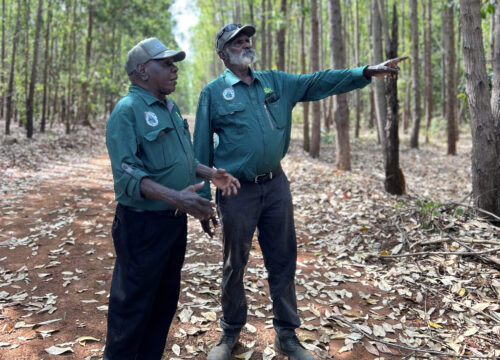

Maximising northern tropical forestry-linking communities and cutting-edge technology Tiwi Islands
This project supported the expansion of tropical hardwood plantations across the Tiwi Islands and northern Australia, combining advanced forestry science with Indigenous-led enterprise development to strengthen productivity, product value and long-term economic opportunities. Delivered through three integrated research programs, the project identified high-performing Eucalyptus pellita genetics, optimised plantation management practices and assessed opportunities for higher-value timber products. Researchers also worked with Aboriginal communities and industry stakeholders to develop a northern forestry industry growth model, providing a framework for future investment, supply chain development and Indigenous participation in the sector. The project directly informed Tiwi Plantations Corporation’s transition from acacia to eucalyptus plantations, contributing to the business case for an $80 million second-rotation investment and the replanting of 30,000 hectares on the Tiwi Islands. The research is now guiding the establishment of 30 million trees over the next decade, while creating a foundation for long-term employment, carbon opportunities and future value-adding industries. By combining cutting-edge genomics, plantation science and community-led development, the project has strengthened the role of Tiwi-owned forestry operations and established a pathway towards a more productive, sustainable and higher-value tropical forestry industry in northern Australia. Publications Watch Tiwi Traditions on Landline – https://www.abc.net.au/news/rural/programs/landline/2023-07-02/tree-traditions:-new-plantation-model-for-tiwi/102552570