

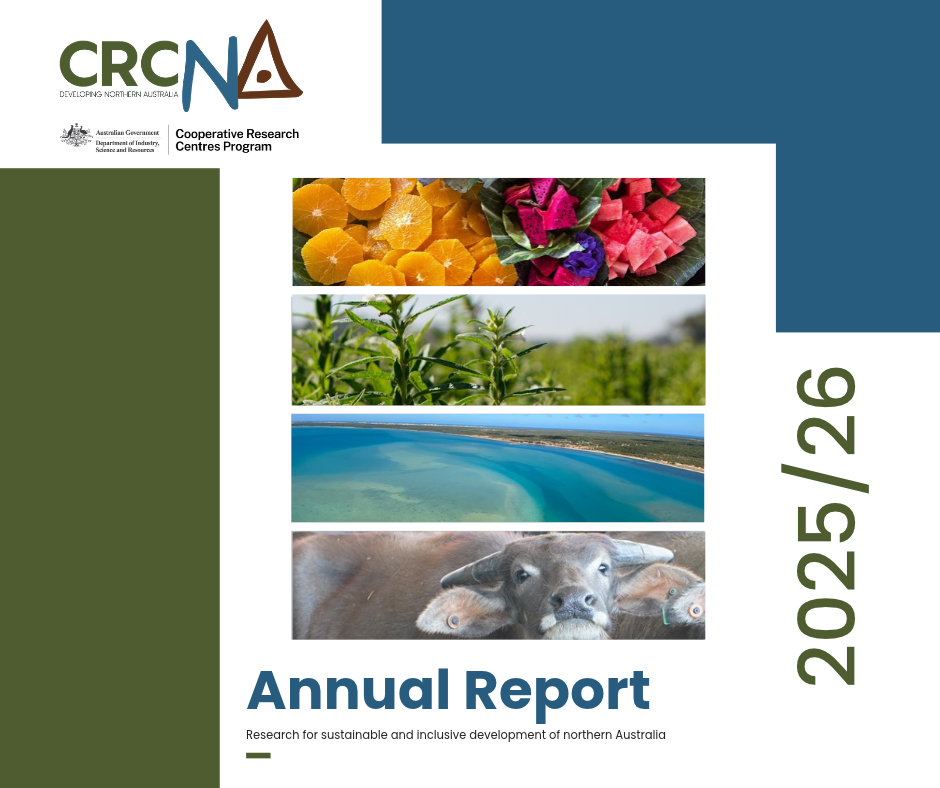
The 2025–26 Annual Report for the Cooperative Research Centre for Developing Northern Australia’s (CRCNA) highlights research supporting agricultural diversification, emerging aquaculture industries, First Nations enterprise and better health services across the north.
As projects move towards completion, the CRCNA is translating findings into practical tools and evidence to support industry adoption, policy and investment decisions.
Chair Dr Sheriden Morris said collaboration remained central to delivering benefits for northern communities.
“Researchers, industry, governments and communities have worked together to address development barriers and build evidence for informed decisions,” Dr Morris said.
“Together, we have built a foundation for enduring impact, and our priority is to ensure it continues to serve northern Australia well.”
Highlights include a First Nations co-designed kidney health nutrition app approved for release through Apple and Google app stores, alongside new alcohol and other drugs guidance and wellbeing resources for Kimberley health services.
Aquaculture research supplied more than 2.57 million Blacklip Rock Oyster spat to First Nations sea farmers and 1.8 million fertilised Black Jewfish eggs for the species’ first commercial-scale larval rearing trial.
In Cape York, nine Traditional Owner groups received support to apply for water licences, backed by 130 maps across 15 catchments. Cultural Market System Development supported paid work for 45 Cultural Knowledge Providers across eight remote communities.
The Kimberley Cotton Gin opening in Kununurra in August 2025 demonstrated the complementary roles of NAIF-supported infrastructure and CRCNA-supported research into northern cropping systems and agricultural diversification.
CEO Anthony Curro said connecting research with its users was essential.
“Working with industry and communities, and establishing clear adoption pathways, helps reduce risk and improve decisions,” Mr Curro said.
“Our final funding year will focus on translating CRCNA’s substantial research investment into useful knowledge, stronger capability and enduring northern value.”
During 2025–26, researchers and partners produced 59 end-user publications and delivered 46 presentations, 32 field days, 27 workshops and eight webinars.
Project Impact Statements and Research Synthesis reports are documenting adoption, economic returns, capability development and policy influence, creating accessible resources for government, investors, industry and communities.
With Commonwealth funding concluding on 30 June 2027, CRCNA’s priorities include completing research commitments, supporting adoption and preserving public access to its knowledge resources.
The proposed Centre for Northern Australia offers a potential mechanism to continue connecting research with regional priorities. Future funding remains to be determined.
Read the Annual Report and explore CRCNA’s research and impact resources at crcna.com.au
Annual Report flip booklet at https://issuu.com/crcna-developingnorthernaustralia/docs/crcna_annual_report_2025-26
