

- Reference # A.1.1718097
- Project Status Current
- Timeframe 3years
- Project manager Ian Biggs
- CRCNA Funding $235,454.00
- Total project value $624,427.00
- Project research participant Queensland Department of State Development
- Research Programs 1. Building potential in Northern Australia
- Location Rockhampton
- Horticulture
- Agriculture
- Strategic policy development
Summary
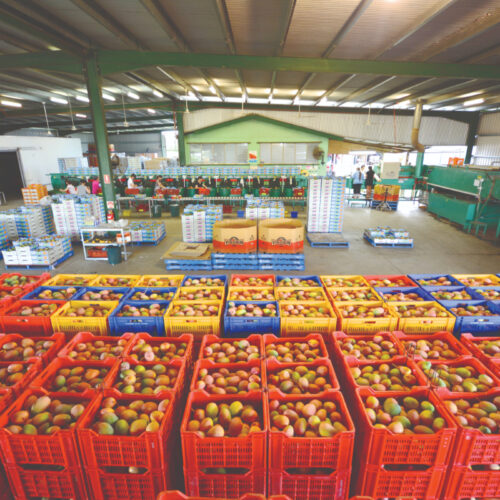
Coordination through the supply chain between growers, processors, marketers and transporters is the main impediment to exporting perishable commodities to Asian markets. Developing strong ties with those Asian markets is critical for expansion and development of perishable commodities in Northern Australia.
This project will examine stakeholder collaboration in planning and investment for exporting high value perishable agricultural commodities (HVPACs) from Northern Australia to Asian markets.
This includes an exploration of multi-party collaborations in producing and processing perishable commodities, developing and enabling supply chain infrastructure as well as identifying policy and regulatory barriers to investment in this sector.
The research approach will combine a literature review, two stakeholder workshops, a farmer survey in Queensland, a consumer choice survey in China and spatial-modelling for volumes of HVPACs in CQ region.
The stakeholder workshops will examine the types and processes of collaboration suitable for HVPACs with regard to processing, investment and international trade mechanisms. In addition, technological innovation or adaptation, appropriate logistics and supply chain management will also be examined.
Upon project completion, the stakeholder collaboration framework for better export market development will enable increased access to Central Queensland’s commodities. This framework will be applicable to all regions within Northern Australia.
Conference papers (published)
Australia New Zealand Regional Science Associations International (ANZRSAI ) 2019. Cairns, Queensland, Australia.
- Rahman, A., Akbar, D., Rolfe, J.(2019). Every community wants an airfreight facility: is this a viable regional agricultural supply chain development option for central Queensland in Australia?
- Akbar, D., Rahman, A., Rolfe, J., Kinnear, S., Schrobback, P., Bhattarari, S. (2019). Working to grow together: horizontal collaboration for horticulture production in Queensland.
Expected outcomes
- Collaboration amongst local, regional, national and international stakeholders for HVPAC development.
- Greater efficiencies and certainties in policy formulations for HVPAC development within northern Australia.
- Long term horticulture production in the region at least doubled resulting in an increase to 5.6 billion from its current revenue of 2.8 billion in Queensland.
- Increased investment in Northern Australia $100M from the three proposed case studies.
- Upon implementation of the functional collaboration framework, a 5% increase, approx $9b in overall GDP within Northern Australia in the short (up to 5 years) to medium term (5 to 10 years).
- This research can be applied to all regions in Northern Australia who can apply the functional collaboration framework to their own regions and industries.
Publications
20 May 2022
Queensland Horticulture Farmers’ Willingness to Participate in Export-Focused Contract-Based Supply Chain Coordination
Type: Report
Industry: Horticulture, Strategic policy development, Supply chain development
19 May 2022
Exporting perishable commodities to Asia: Summary Report
Type:
Industry: Horticulture, Strategic policy development, Supply chain development
14 March 2022
Final report – Stakeholder Collaboration Models for Exporting Perishable Agricultural Commodities in Asia
Type: Report
Industry: Horticulture, Strategic policy development, Supply chain development
14 March 2022
Translation of the Agricultural Supply Chain Collaboration Models- Recommendations and End-users’ Guidelines
Type: Report
Industry: Horticulture, Strategic policy development, Supply chain development
20 December 2021
Investigating Chinese consumer’s purchasing behaviour and their perception and willingness to pay for imported Australian fruits and vegetables
Type: Report
Industry: Horticulture