

- Reference # A.1.2021014
- Project Status Current
- Timeframe 1 year
- Project manager Sarah Docherty
- CRCNA Funding $128,155.00
- Total project value $323,453.00
- Project research participant LMC Training Pty Ltd
- Project research co-funder Fisheries Research and Development Corporation (FRDC)
- Research Programs 1. Building potential in Northern Australia
- Location Townsville, Darwin, Rockhampton
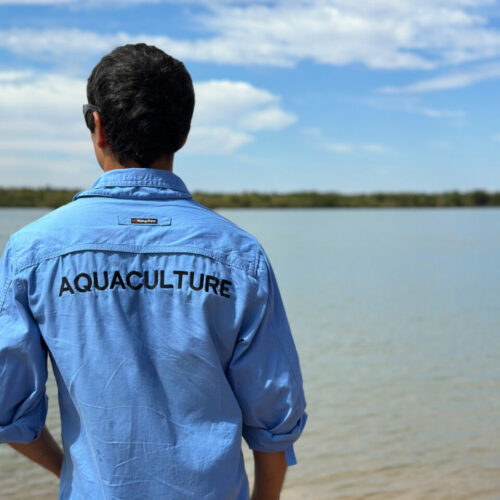
- Aquaculture
Summary
The Northern Australia aquaculture industry will need between 1400 and 2300 new skilled staff by 2030 to support projected industry growth. The CRCNA’s Northern Australia aquaculture situational analysis identified challenges in the shortage of domestic skilled and experienced aquaculture staff and on-farm biosecurity and health management capacity building across the north. The report also captured the concerns of producers about their requirements to build skills to meet industry growth needs, including professional development for current staff, aligning training with industry needs and promoting career opportunities in the northern Australian aquaculture industry among regional communities.
This project defined the industry’s need for specific skills and education levels, mapped existing training and education providers and proposes improved models for education and training delivery. By evaluating industry workforce needs currently and into the future and analysing the gaps between industry need and educational output, the project has identified gaps in careers pathways to meet future industry requirements.
These careers pathways will form the basis of promotional tools created to highlight education and skills development options that lead secondary students into the aquaculture industry. Cost-effective delivery models for training will be key to the outcomes of the project and a pilot project to up-skill existing industry employees in biosecurity will be used to develop and de-bottleneck new training delivery models.
Expected outcomes
The immediate and short-term benefits of the project will be increased biosecurity awareness and disease responsiveness, more refined training and education approaches for aquaculture and increased awareness of career prospects to attract new people to the sector. In turn, this will put mechanisms in place to critically improve the chance of achieving the long-term outcome of a future-ready workforce that meets industry demand.
The project included comprehensive communication with stakeholders and the timely sharing of all outputs. Project participants and stakeholders will directly use the outputs of the research to inform cost-effective training and education approaches, recruit new students into aquaculture career pathways and implement training on-farm to enhance productivity and GDP.
The project is expected to provide value to the Northern Australian aquaculture industry across several areas:
- Provide educational providers with documentation of the skills sets required of their graduates in order to shape course outcomes
- Provide data on the capacity requirements of education providers into the future to guide the course size needed to meet the expansion ambitions of the industry
- Provide evidence and pathways to meaningful careers for students entering the latter stages of secondary education
- All of the above result in workforce education that more closely matches industry demand for qualified personnel
- The outputs of the project are further expected to form the basis of strategic planning processes for education providers since it will provide evidence for future need and directions for growth
Publications
3 June 2022
Northern Australia aquaculture biosecurity practical assessment
Type: Video
Industry: Aquaculture
2 June 2022
Northern Australia aquaculture biosecurity training video #3
Type: Video
Industry: Aquaculture
1 June 2022
Northern Australia aquaculture biosecurity training video #2
Type: Video
Industry: Aquaculture
1 June 2022
Future proofing Northern Australian aquaculture – Biosecurity training video
Type: Video
Industry: Aquaculture
5 October 2022
Future-proofing the NA aquaculture industry need for skilled staff to 2050
Type: Report
Industry: Aquaculture
30 June 2022
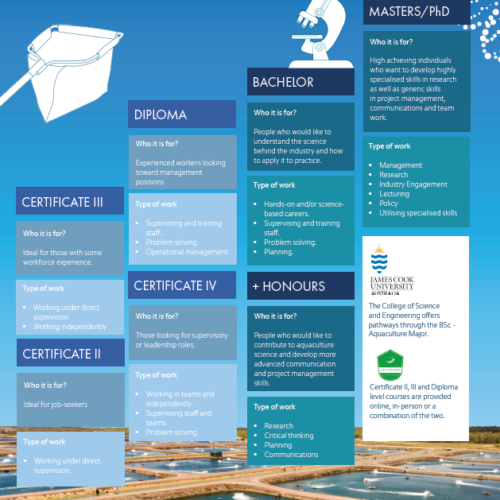
Future proofing Northern Australia aquaculture training resources
Type: Fact sheet
Industry: Aquaculture