
- Reference # AT.2.1718031
- Timeframe 3 years
- Project Status Current
- Location Dampier Peninsular, Broome, Daley River Port Keats Land Trust region
- Total project value $2,276,370.00
- Project manager Ian Biggs
- Research Programs 2. New and developing industries in Northern Australia
- Bush foods
- First Nations Led Business Development
- Supply chain development
Summary
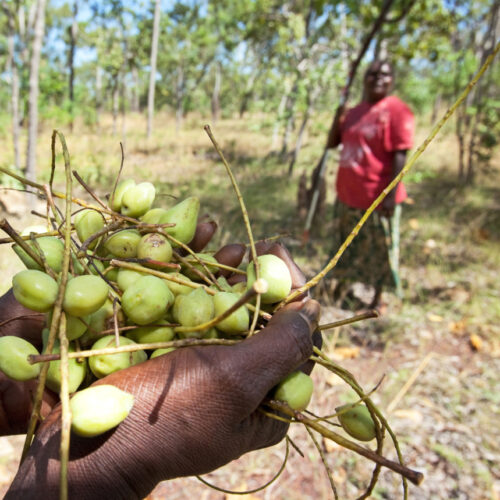
This project brings together existing partners the UQ QAAFI and Kindred Spirits Enterprises – Traditional Homeland Enterprises (T.H.E.) to review the existing value chains within the established Kakadu Plum (KP)/ Gubinge (Terminalia ferdinandiana) industry to address the issue of supplying consistently high quality KP/ Gubinge products to ensure a more reliable supply of products which can better capture market access and grow customer loyalty.
Existing Aboriginal suppliers of KP/Gubinge in the Thamarrurr Region of NT and the Kimberley region of WA will work with researchers to undertake an extensive review of the existing value chain by mapping, analysing and identifying efficiencies, identifying impediments and solutions to overcome them. Innovative solutions to local processing and maintaining fruit quality will be trialed and new commercial applications will be developed.
In addition to identifying production and facilities enhancements, the project will also work to develop training tools for product costing, start-up businesses, hygienic processing of food and quality assurance.
Expected outcomes
- A 5 per cent increase in the fruit reaching markets in prime condition due to enhanced training and system improvements.
- Forecast analysis shows a 10 per cent per annum increase in demand and production growth of all KP/Gubinge products nationally and internationally.
- The value of the KP/Gubinge industry is forecast to increase to $10 million in the next five years – it is expected the project to contribute to about 10 per cent of the growth.
- Improved training and systems development, including 15 rangers in safe food handling and 30 community members in business and product costing, will enable community members to create an economic flow back into communities and provide a pathway to roll out this training in establishing small businesses to other Aboriginal and Torres Strait Islander communities across northern Australia.
- Development of new products will enable new market access.
- Adoption of agribusiness micro-enterprise model for other native food products will ensure a greater participation by indigenous communities and generate confidence in mainstream agriculture companies to purchase these value-added products.
- Within 5 years the value chain model and IP and Benefit Sharing is expected to be adopted by at least 20 communities growing to 40 communities throughout Australia within 10 years.
Publications
October 7, 2022
Kakadu Plum research publications and materials
Type: Report
Industry: Bush foods, Supply chain development