


- Author Advance Rockhampton and partners
- Publish date 20 May 2024
- Type Video
- Documents
- Water: Making Water Work program
Summary
Rockhampton’s Fitzroy Food Bowl provides growers with access to the largest and most reliable water catchment on Australia’s east coast.
Infrastructure upgrades within the Fitzroy River Supply Schemes are unlocking underutilised and highly productive bulk water access, with agricultural opportunities for growers of lychee, macadamia, avocado, mango, mandarin, cotton and grains.
The Fitzroy Food Bowl prospectus outlines the strength and diversity on offer for growers across the Rockhampton Region, and a wealth of agricultural opportunities yet to be discovered in Central Queensland.
Additional info is available at: https://www.advancerockhampton.com.au/Resources/Industry-Publications/Fitzroy-Food-Bowl
Projects


Making Water Work program: Achieving reef water quality requirements in new agricultural developments
This project supported the sustainable expansion of agriculture in the Lower Fitzroy by helping producers and emerging agricultural enterprises meet reef water quality requirements while maintaining productive and commercially viable operations. As agricultural development increases in response to new water availability from Rookwood Weir, the project addressed the practical and regulatory challenges of managing sediment, nutrient and pesticide runoff in a sensitive Great Barrier Reef catchment. Working with producers, industry and government partners, the project developed the South Yaamba Reef Water Quality Precinct Plan, including detailed water quality modelling, practical implementation tools and a transition pathway to support continuous improvement in land and water management. This work helped landholders navigate reef regulations and the Land Management Code of Practice, implement effective monitoring and record-keeping systems, and adopt management practices that minimise environmental risk from the outset of development. A key outcome was the development of 19 individual irrigation farm plans, enabling up to 800 hectares of new irrigated production and access to 5,600 ML of Rookwood Weir water, subject to regulatory approval. The project also established a systems governance framework and streamlined approval processes between agencies to support coordinated compliance and water quality management. Beyond regulatory compliance, the project demonstrated how agricultural development and reef protection can be advanced together. By supporting no net increase in sediment, nutrient and pesticide runoff to the Fitzroy River, the project contributes to Reef 2050 water quality objectives while creating a pathway for new agricultural production, estimated to generate an initial $2.64 million annually, with future opportunities in higher-value horticulture.

Making Water Work: Integrating nutrient, waste and energy streams in agriculture development through hyacinth harvest and processing
This project investigated how invasive water hyacinth in the Fitzroy River could be transformed from an environmental management challenge into a productive agricultural resource. Originally introduced to Central Queensland as an ornamental plant, water hyacinth has become a significant aquatic weed due to its rapid growth, dense biomass and long-lived seed bank, reducing waterway health, impacting ecosystem condition and creating ongoing management costs for land managers and local councils. The project explored practical pathways for harvesting and reusing water hyacinth biomass, with a focus on its potential as a soil ameliorant for agricultural production in the Lower Fitzroy region. By removing nutrient-rich biomass from the waterway, the project also examined opportunities to reduce nutrient loads in the Fitzroy catchment, improve water quality flowing to the Great Barrier Reef and support healthier aquatic ecosystems. Research findings highlighted strong potential for water hyacinth to be repurposed into agricultural products such as compost, mulch and biochar, reducing reliance on imported soil amendments while supporting more circular approaches to land and water management. The project also assessed the economic feasibility of different beneficial end uses, including a cost-benefit analysis of harvesting and processing pathways to identify realistic implementation opportunities. By linking invasive weed management with nutrient recovery and agricultural development, the project provides a practical model for turning an environmental liability into a productive resource, with potential benefits for water quality, farming productivity, waste reduction and regional resource efficiency across northern Australia.
Making Water Work program: Mobilising strong water governance arrangements
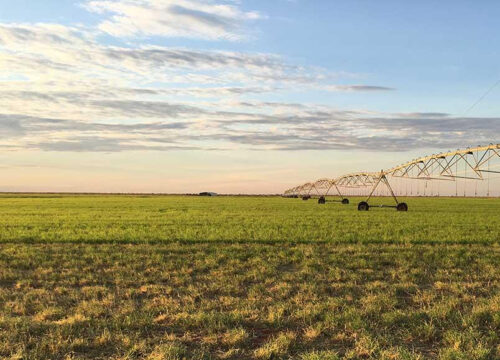
The development of irrigated agriculture in the lower Fitzroy has been accelerated by the completion of Rookwood Weir, which adds significant new water supplies to an already complex system that includes the Fitzroy Barrage, Eden Bann Weir and unsupplemented water sources. While this creates new opportunities for agricultural growth and investment, the fragmented governance arrangements across multiple water owners and operators, limited market transparency, and weak coordination among water users have constrained efficient water management and allocation. This project examined the governance, operational and market arrangements needed to support a more effective and coordinated irrigation sector in the lower Fitzroy. Working with irrigators and key stakeholders, the research identified barriers to efficient water use, including limited irrigator representation in decision-making, inconsistent management arrangements across water schemes, and underdeveloped water trading mechanisms that restrict market participation and investment. The project explored practical pathways to strengthen cooperation between stakeholders, improve access to market information, support more effective water trading, and enhance governance structures as the irrigation sector develops. Outputs included guidance for water market participants, analysis of governance reform options, and recommendations to address operational and pricing barriers affecting water access and use. By improving coordination, transparency and market function, the project aimed to support more efficient water allocation, stronger stakeholder participation, and greater confidence for existing irrigators and new investors in the lower Fitzroy.
Making Water Work program: Defining a Supply Chain for Lower Fitzroy
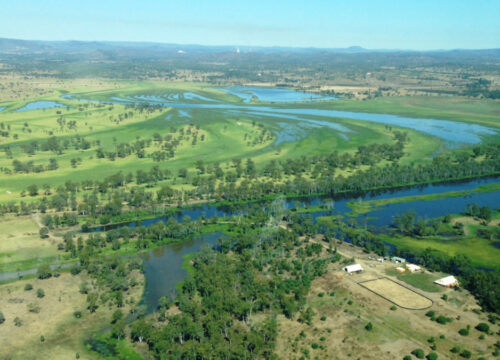
Access to water alone does not guarantee agricultural development. New irrigation-based enterprises also require coordinated infrastructure, supply chains, services, governance and investor confidence to support long-term growth. In northern Australia, where there are relatively few examples of large-scale irrigation precinct development, understanding how these factors align is critical to reducing development risk. This project developed a strategic vision for agricultural precinct development in the Lower Fitzroy region of Central Queensland, using the opportunities created by Rookwood Weir as a case study. It examined how additional water resources could be translated into practical agricultural development by identifying suitable production opportunities, mapping potential development precincts and supply chain requirements, and assessing the broader economic and investment conditions needed to support growth. The project brought together spatial analysis, agricultural opportunity assessment, infrastructure planning and investor engagement to better understand the conditions required for successful precinct development. It identified both opportunities and constraints, helping stakeholders prioritise actions needed to support future investment and coordinated regional development. While focused on the Lower Fitzroy, the project was designed to generate broader lessons for water-led agricultural development across northern Australia. The findings provide a practical framework for planning future irrigation precincts, highlighting the importance of governance, collaboration, long-term infrastructure planning and market confidence in turning water infrastructure investment into sustainable regional growth.

Making Water Work program: Visionary land use planning to facilitate development precincts
This project was one of five sub-projects developed to support the broader Making Water Work business case, an integrated regional initiative designed to maximise the economic, social, environmental and cultural value of new and existing water resources in the Lower Fitzroy region following the development of Rookwood Weir. While new water infrastructure creates opportunity, agricultural development depends on more than water availability alone. It requires coordinated planning, infrastructure investment, landholder participation and a clear understanding of market demand and development constraints. This project focused on addressing those challenges by testing how strategic land use planning could support the development of a new irrigation precinct in the South Yaamba area, targeting landholders with suitable agricultural land but without direct access to river water. Working closely with local landholders and regional stakeholders, the project confirmed demand for irrigation water, assessed land suitability and agricultural development potential, and modelled likely water demand, production value and broader economic benefits. A structured engagement process informed the development of a preferred irrigation scheme concept, including preliminary infrastructure design, capital and operating cost estimates, and consideration of associated impacts on transport, energy, telecommunications and supply chains. The research validated the viability of a local irrigation water supply scheme to improve water security and unlock higher-value agricultural production in the region. Early estimates indicated the potential for significant capital investment in both shared irrigation infrastructure and on-farm development, with increased agricultural production and associated regional economic benefits. As a pilot project, this work developed a practical methodology for assessing new irrigation precinct opportunities that can be adapted to other regions with similar objectives across northern Australia. More information is available at: https://www.advancerockhampton.com.au/Industries/Agriculture-and-Water/Cropping-Irrigation-Horticulture https://www.nationaltribune.com.au/rockhampton-regional-council-leads-new-project-to-protect-the-reef